It became known as the ‘Big Australian’. But how did a boundary rider working in Australia’s outback start a venture that would become the largest mining company in the world?
“At the start it was very bad. There was no accommodation, water and provisions were scarce and the weather was very trying. It was an awfully dusty place. For 12 months it was really doubtful whether we would make anything out of it; I had unlimited faith in it right through. Of course, I did not think it would turn out as big as it has done, but I always thought it would be a fairly good thing.” Charles Rasp, Argus, 19 August 1905
In September 1883 Charles Rasp, a boundary rider for the Mt Gipps sheep station discovered what he thought was tin oxide on an unusually shaped formation known locally as the Broken Hill.
While not a geologist, Rasp had trained and worked in the chemical industry in his native Germany and had some knowledge of mineral formations. He decided to send samples for testing to Adelaide. The assayer’s report was disappointing. It showed concentrations of lead and zinc but only slight traces of silver.
Rasp was not discouraged and together with co-workers David James and James Poole registered a 40-acre mineral claim on the hill.
George McCulloch, the manager and part-owner of the Mt Gipps station. McCulloch had been opposed to anyone prospecting for minerals on his property. But following a recent drought, the station was in a poor financial state so McCulloch now took a keen interest.
Three becomes seven.
McCulloch convinced Rasp to take on more partners and organised some of the station hands to immediately peg off claims. These seven men – Rasp, McCulloch, James, Poole, Phillip Charley, George Lind and George Urquhart – became known as the Syndicate of Seven.
This syndicate quickly formed into one private company called, The Broken Hill Mining Company.
Not a great success
Mining on the broken hill property was not an immediate success. This resulted in shares in the enterprise changed hands many times between pegging the claim in 1883 and floating the company two years later. Lind, Poole and Urquhart sold out of the syndicate before the company made any significant finds.
However, in January 1885 the syndicate’s luck changed when Phillip Charley found the first substantial amount of silver on the claim. In the company’s first large-scale smelting in Melbourne an astonishing 35,600 ounces of silver was produced from 48 tons of Broken Hill ore.
The big Australian.
BHP
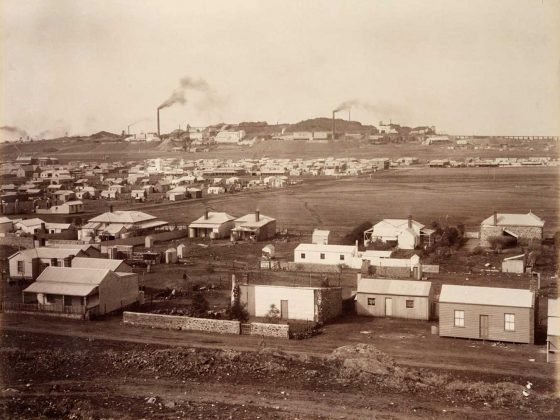
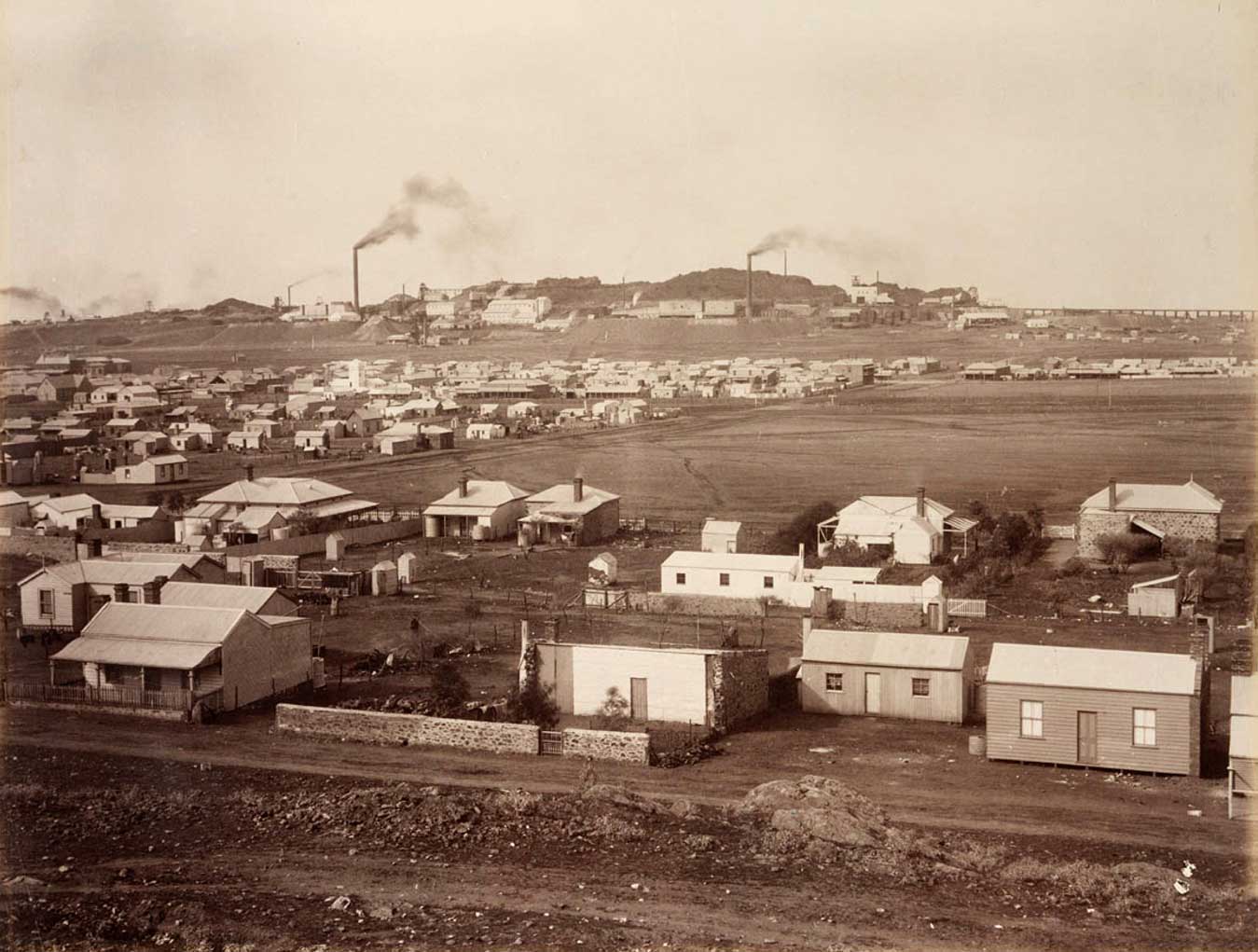
Following the first load of silver produced, the promise of the broken hill claim attracted many unemployed miners from around the country. Most of the population of Silverton moved there, as did many Cornish miners from South Australia. The town of Broken Hill sprang up at the base of the hill, with Argent Street as its main road. In just six years the population neared 20,000.
Company name: BHP
Founders: Rasp, McCulloch, James, Poole, Phillip Charley, George Lind and George Urquhart
CEO: Mike Henry
Established: 1885
Location (HO): Melbourne, Australia
Main Products/Services: Mining, metals and petroleum
Number of employees: 72000
Revenue: USD$44.29 billion
Website: www.bhp.com
Sources:
https://www.nma.gov.au/defining-moments/resources/founding-of-bhp